


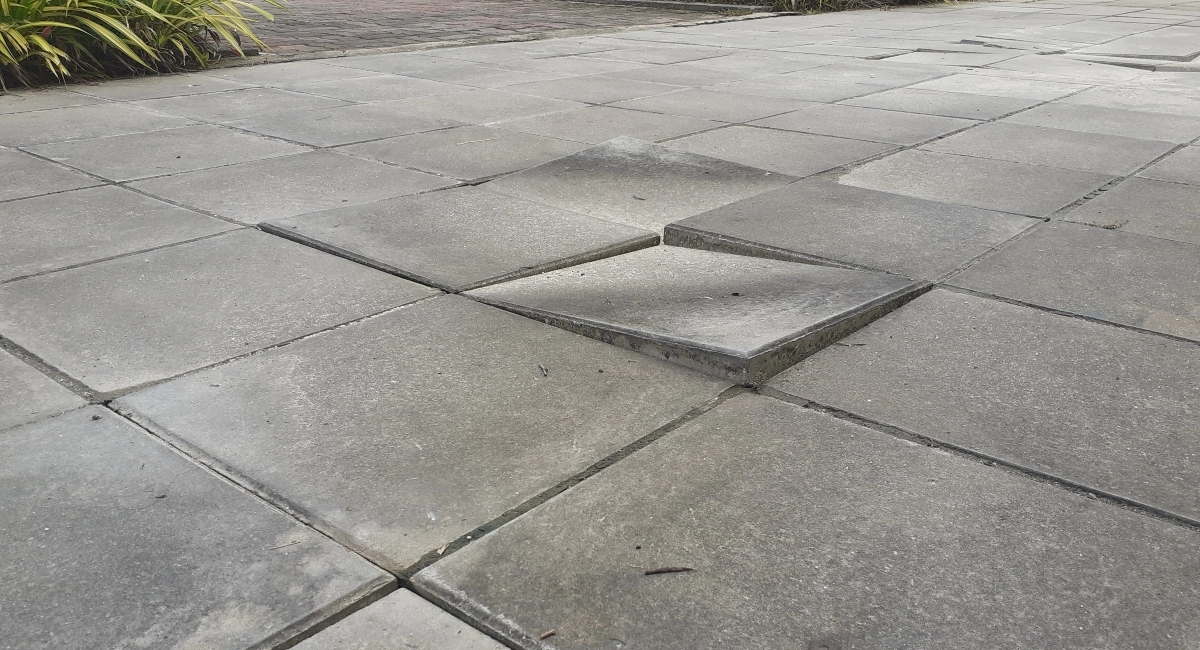
Concrete lifting has become one of the most cost-effective and efficient alternatives to concrete replacement. For contractors, the ability to restore sunken slabs without demolition means faster project completion, less disruption, and satisfied customers. However, one question comes up repeatedly in the field:
When is a concrete slab too damaged to lift?
The truth is that many slabs property owners assume need replacement can actually be restored through slabjacking or pressure grouting. At the same time, there are situations where lifting is no longer the best solution.
Understanding the difference can help contractors provide accurate recommendations and build trust with clients.
Most Settled Concrete Can Be Lifted
One of the biggest misconceptions about concrete lifting is that a slab must be in near-perfect condition to be salvageable. In reality, settlement is often the primary problem—not the concrete itself.
Sidewalks, driveways, warehouse floors, patios, and commercial slabs frequently sink because of soil erosion, poor compaction, washouts, or changes in moisture content beneath the slab. As long as the concrete retains enough structural integrity, lifting can often restore the slab to its original elevation.
Many slabs that appear severely settled can still be successfully raised using a properly designed grout mixture and professional lifting equipment.
Signs a Slab Is a Good Candidate for Lifting
Contractors should look beyond the amount of settlement and evaluate the overall condition of the slab. Generally, a slab is a strong candidate for lifting if:
- The concrete remains largely intact
- Cracks are limited and stable
- The slab has not broken into numerous loose sections
- The underlying cause of settlement can be addressed
- The slab still has sufficient structural strength
In many cases, a slab that has settled several inches may still be repairable if the concrete itself remains sound.
When Cracks Become a Problem
Cracking alone does not automatically disqualify a slab from lifting. In fact, many successful slabjacking projects involve cracked concrete. Hairline cracks, shrinkage cracks, and even larger settlement-related cracks can often be stabilized during the lifting process.
The concern arises when cracking has progressed to the point where the slab behaves as multiple independent pieces rather than a single structural unit.
Warning signs include:
- Wide, displaced cracks
- Multiple intersecting crack patterns
- Significant vertical movement between sections
- Sections that rock independently when pressure is applied
When a slab loses its ability to function as a unified structure, lifting may produce inconsistent results or increase the likelihood of future failures.
Extensive Surface Deterioration
Contractors should carefully evaluate the surface condition of aging concrete. If the slab exhibits widespread spalling, scaling, or surface deterioration caused by freeze-thaw cycles, deicing chemicals, or years of wear, lifting may solve the elevation problem but leave the customer with concrete that continues to deteriorate.
Some common warning signs include:
- Exposed aggregate across large areas
- Deep surface flaking
- Significant edge deterioration
- Concrete that crumbles under moderate pressure
When structural degradation is severe, replacement may provide a more durable long-term solution.
Severe Structural Damage
Certain forms of damage indicate that lifting alone may not restore the slab’s performance. For example, slabs subjected to heavy overloading, foundation movement, or repeated settlement events may develop structural failures that extend throughout the concrete. Examples include:
- Large fractured sections
- Significant slab displacement
- Severe corner breaks
- Structural reinforcement failure
- Repeated lifting attempts that have not held
In these situations, replacement may be necessary to ensure safety and long-term stability.
Consider the Cause of Settlement
One of the most important factors contractors should evaluate is what caused the slab to settle in the first place. Lifting a slab without addressing the underlying problem can lead to recurring settlement. Common causes include:
- Water infiltration
- Soil washout
- Improper compaction
- Expansive soils
- Leaking utility lines
- Heavy traffic loads
If the underlying issue can be corrected and the slab remains structurally sound, lifting often provides excellent long-term results.
Commercial & Industrial Slabs Require Additional Evaluation
Warehouse floors, manufacturing facilities, distribution centers, and other industrial environments present unique challenges. These slabs frequently support:
- Heavy machinery
- Forklift traffic
- High point loads
- Sensitive equipment
Even minor cracking can have significant operational implications in these environments. Contractors should evaluate load requirements, slab thickness, reinforcement, and overall structural performance before recommending lifting or replacement.
Fortunately, many commercial slabs that appear severely settled can be restored through pressure grouting and void filling without interrupting facility operations.
The Cost Advantage of Lifting
One reason contractors and property owners continue to favor slabjacking is the significant cost savings compared to replacement. Lifting typically offers faster project completion, less labor, and minimal site disruption. You can also reduce material costs and get right back to using the slab after repair.
For slabs that remain structurally sound, lifting can extend service life for years while avoiding the expense of demolition and reconstruction.
The Bottom Line
A concrete slab is not necessarily too damaged to lift simply because it has settled, cracked, or become uneven. In many cases, lifting remains a practical and cost-effective solution. The key is evaluating the slab’s overall structural condition, not just its appearance.
If the concrete remains intact, stable, and capable of functioning as a single structural unit, slabjacking or pressure grouting can often restore performance and extend the life of the slab. However, when severe structural deterioration, extensive fracturing, or widespread material failure is present, replacement may be the better long-term option.
For contractors, understanding the difference allows you to provide honest recommendations, deliver better outcomes, and maximize opportunities for successful concrete lifting projects.
Find resources below:
- Explore Black Jack Grout Pump Accessories
- Shop our USA-made grout pumps
- Talk to a Specialist
